
Steward Baylor Interview: Inside the Launch of ANEC and the Future of National Enduro
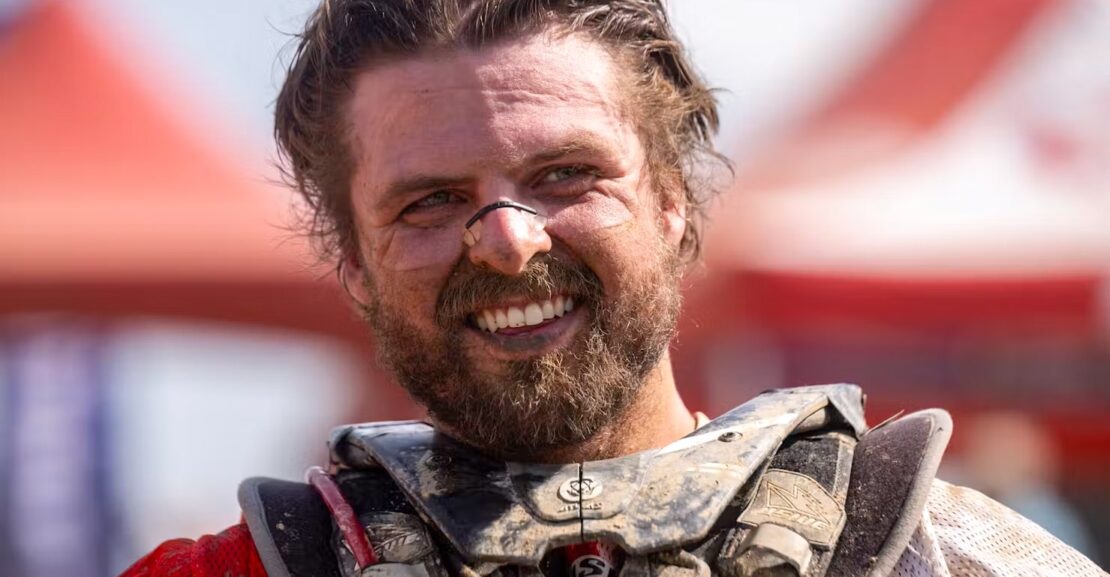
Even after winning six national championships, Steward Baylor Jr. still has plenty of go left in him. Between his many titles, owning his own team and his larger-than-life personality, “Stu” has already made his mark in National Enduro history, and could easily hang his helmet on an outstanding career. However, it seems this might only be the beginning of how Baylor plans to impact the American off-road racing scene. In 2025, just after clinching the National Enduro Championship, Baylor announced his new role in the series: promoter.
The National Enduro Promoters Group is now officially the American National Enduro Championship (ANEC), and Steward Baylor is leading the way in an effort to steer the most classic form of off-road racing in the U.S. in a new direction. Although Baylor isn’t putting his name and face at the forefront of the rebrand of the ANEC enduro series, we caught up with him to hear about his visions for the future of National Enduro, how the series is already evolving. In this Steward Baylor interview, he talks about his plans to balance being a racer, team owner, and now promoter.
Why Steward Baylor Decided to Buy the National Enduro Series
Dirt Bike: Tell us about your decision to take on the role of promoter and some of your vision for the next chapter of National Enduro.
Steward Baylor: Racing’s been a big part of my life, pretty much since I could walk. Enduro is the biggest part of that, with multiple championships there for my brother[[Grant]and me.
It actually all started years ago. I was interested in being involved, dating back to 2017–2018, the first time there were rumors that Alan [Randt] may potentially sell the series. I’m glad that he didn’t. I definitely wasn’t ready to take on that role at that time. But the timing worked better this go-around.
But when we heard that there was talk of it, I reached out to Alan and kind of got the ball rolling. In my opinion, I felt that what Alan had done years ago could almost be done again. A backstory on that is enduro used to be very complicated for people to get into because of how it worked, timekeeping, and the mileage wasn’t what you actually rode. The 100-mile enduro never actually covered 100 miles. It was the way that the clock kept rolling. Alan took things to a restart format, which made it easier for people to get involved, and we’re even trying to take another step beyond that without getting rid of anything Alan did. A lot of [the format changes] he did with Nationals trickled into local series and local enduros, and it made things easier and a little less complicated.
For the sport to grow with today’s generation, I think that some changes we could make would equal growth without actually diminishing the roots of National Enduro. We definitely don’t want to see it turn into a Sprint Enduro format. But, we do want to take some from what Sprint Enduro has done, what GNCC has done and World Enduro, and try to make it a little bit more fun for all. We have a unique format of enduro here in the U.S. that is separate from others. So, we went with the American National Enduro Championship because it is the American style of enduro, at least it has been for the last 17 years. We wanted to embrace that.
DB: So, it’s about embracing the roots of classic enduro but making it easier to digest for the younger crowd.
SB: Correct. Honestly, the easier the format is, the easier it is to get involved with. I think people that come to an event, if they leave confused or even if they’re confused prior to lining up, it makes it difficult to want to engage in that type of activity. We talked to a lot of people that race hare scrambles and not enduros, and a lot of it was that people just don’t understand the mathematics. They think it’s still a timekeeping event. It’s far from that. Yes, you have to keep time. You have to go in [to your test] on time, but once your minute rolls up, you are just racing. It’s very simple. You just race until you see that scoring chute.
It is a lot, but it’s not head-to-head racing. It’s slightly different, and in my opinion, much more enjoyable. And whether you’re racing for bragging rights, trophies or a paycheck, it’s more fun. We are also appealing to a whole other crowd of riders who maybe they don’t like racing at all, but they would be willing to pay for a directional trail ride. There are a lot of people who will go out and enjoy a trail ride in Colorado, Utah, whatever, and we want to appeal to that crowd as well. If you just want to go ride on a directional trail and hang out with your buddies, we can facilitate that. This is why we want to push that two-day format. There are people that don’t want to race with the pros. You don’t want to be traction for me per se.
What Is ANEC Enduro Series? The Rebrand Explained
DB: When the ANEC announcement first came out, there was hardly any mention of your name, which could have had a bigger draw. Would you rather the series be recognized on its own merit and not be attached to the Baylor name?
SB: Yeah, we discussed it, but I didn’t think doing that would be beneficial to what we do. This is my last year racing enduros. I’m finishing out my racing contracts, and rather than my races, I’ll be focusing on the promotion side. It’s definitely extremely difficult as is, trying to keep separation and still make sure that the series that I own is in good hands. For me, I didn’t see the benefit of associating my name. I think that there may be controversy if you get a rider that owns a team involved [in promoting a series], and there’s going to be controversy no matter what, but we’re trying to keep that as low as we can.
DB: Did Alan Randt know you were interested in someday promoting National Enduro? Or, was this something you kept to yourself until recently?
SB: No, he knew I was interested. Little rumors got flying around that my name was in the hat, and I knew he was going to try to sell it to somebody that he felt would be able to carry a vision and leave National Enduro in good hands. Although Alan and I didn’t see eye to eye through the promoter/racing side of things, which it’s easy to do at that high level, but I think he understood that I was a man of morals, and I was going to follow a certain code.
I learned a lot about Alan over the last year. This all started nearly two years ago, and I got to learn a lot about Alan and actually watch him work. I can never take anything away from Alan Randt; he is a workhorse. We took a lot away by having our guy Blake Plonsky, who’s helping manage that series, and then Cory Buttrick got involved late last year to see two events run. Alan taught us a ton, and it’s a whole new level of respect when you get to see behind the scenes what actually takes place to make sure 50-70 miles of trail are marked accordingly. An enduro, being a timed event, everything’s gotta be on time. Unlike a hare scrambles, where if you have a problem you can delay it, there’s very little room for failure with an enduro, and Alan was really good at doing that.
The Two-Day Format: Safety, Scheduling, and the Working-Class Racer
DB: Tell us more about the two-day format, why you want to make that change and why the pros are going to run on Saturday before the support classes on Sunday.
SB: Our vision is to go to the two-day format. I would say that priority number one is safety. We have an 83-year-old man that is out there racing every event. He doesn’t want to get run over by any of the Pro1 guys. Claudia, who’s in the women’s age class, her mile-per-hour average is half what ours is, and it’s dangerous for her and the pros to be together on the same track, so we’re trying to do the two-day format.
We took a select group of people that did all our rounds last year and just made some phone calls before we chose who would race on what day, and the feedback that we got is how we split our events. Number one was that a lot of these people said, “Well, if you’re saying that we would have to race Saturday morning, we would have to travel Friday, miss another day of work, where right now we currently travel Saturday, race first thing Sunday morning, we’re done at 2 pm, and we can make it home by Monday morning for work.” The majority of these guys are working class. So, we were hoping to not affect their work schedule. I asked those guys, “What if the track’s a little rougher?” Most of them had the same opinion. An enduro, with only 500 single tire marks, is still less beat up than our local hare scramble. It’s not like it’s going to be rough.
Farm 14 and the First Two-Day ANEC Round: How It Went
DB: The 2026 ANEC schedule has two rounds that are this new two-day format, and one already took place (round three at Kevin Windham’s Farm 14). How did that go?
SB: I was actually able to ride day two there at Windham‘s and it wasn’t rough. The track was burned in and there was some chop, but it didn’t look like a hare scramble, GNCC or anything. It was honestly a hit. It gave me a lot of clarity that it was the right decision, and two days are the way that we want to go. That said, there were some things that we needed to do better on the back end, just timeframe and coordination. It’s definitely a learning process, but overall, I think our crew is doing a fantastic job, and we’re moving in a direction that I think will stick.
Making Enduro More Amateur-Friendly: Course Design and Live Stream Plans
DB: What other changes are you implementing to make it easier and more appealing for amateur racers?
SB: We’re also trying to design our courses to where the majority of the tests either start or finish in the parking lot [rather than a remote pit area]. If you are a single person that’s traveling, you don’t have to worry about bringing a person to chase for you. You can do it all by yourself and enjoy the day. We called GNCC families and asked why they didn’t do the Nationals, and most of them said that they arrive in a big motorhome or their wife is not confident chasing, so we just don’t. It really came down to the logistics of racing. If you’re a group of three, four or five guys going to the same event and you get separated on lines, it’s very difficult for people to find multiple chase vehicles. In this case, everything’s there in the parking lot, they’ll be able to see each other in each test and not have to worry about chasing.
The new concept also built that idea of hopefully getting a live stream involved. Live stream is extremely expensive. You have to build a schedule. After we did that Farm 14 event where everything came back [to the parking lot], now I can show these guys where the tests start and finish, they can figure out camera locations, service, timeframe, etc., and actually build a plan for doing live feeds. That would be a really cool concept in the future.
Can ANEC Expand West — and Can It Ever Challenge GNCC?
DB: Is there any plan at this point to bring ANEC further west?
SB: We tried. We had some discussions with a few different property owners out there, and it just never really grew legs. And then also we’ve looked at numbers, and basically any time we had a National west of the Mississippi, we get crushed on our numbers. When we first look at having a race, yeah, it’s a great idea. Then we think about the travel and having our crew there. It costs us twice as much money to put on an event that gets half the draw.
For example, in Oklahoma this year, we lost money there. And that is very typical when we go out west. We have a huge demand on Facebook, it seems like. The Facebook warriors want to criticize us not going far enough west, but any time we try, none of those Facebook warriors ever seem to show up. So, we usually get destroyed on our numbers, and that makes it extremely difficult to do much traveling. If we could find a way to make sure the numbers were there, we’d love to try a round or two that are further west. On a race team with Rocky Mountain being one of our large companies, I’ve definitely put some thought into possibly doing a Utah location. There’s some amazing riding out there, and it’s a blast. But, it’s definitely difficult to make that one grow legs.
DB: Back in the day, National Enduro was king in the landscape of off-road racing. Is that something you aspire to return it to in the long run?
SB: I don’t know if we could ever compete on sheer numbers with GNCC, because for us, we have to look at time and how many riders we can put on the rows. I want to keep the core of enduro racing and keep it fun and when we get to where we’re putting seven, eight riders on a row, it really takes the enjoyment out for a lot of people. Also, if we go to where we’re doing 200 rows to fit it all in, we’re going to run out of daylight.
We want to try to hopefully capture that 1000-rider mark. That’s what we’re looking at. Obviously GNCC, they’re pulling numbers triple that at some of their events. We would love to hit that 1000-rider mark, but at that point, I feel like we would almost be capped. Being the smaller series, maybe we can put our focus elsewhere. GNCC has done such a great job of creating an event atmosphere, and we want to try to build more of an atmosphere for the weekend, but to be king, I would say it’s a tall order. We would definitely love to be a lot bigger than we are and a lot closer to that GNCC size where riders could choose us to make a living and not have to run multiple series. That would be a landmark for us if we can get to that point where OEMs saw enough benefit to send all their semis, and the riders actually choose to come to us. Obviously, there are a lot more pros that line up at GNCCs, and I’m not trying to take anything from them, but I’d love to be able to share all of the riders with them when it comes down to it.