
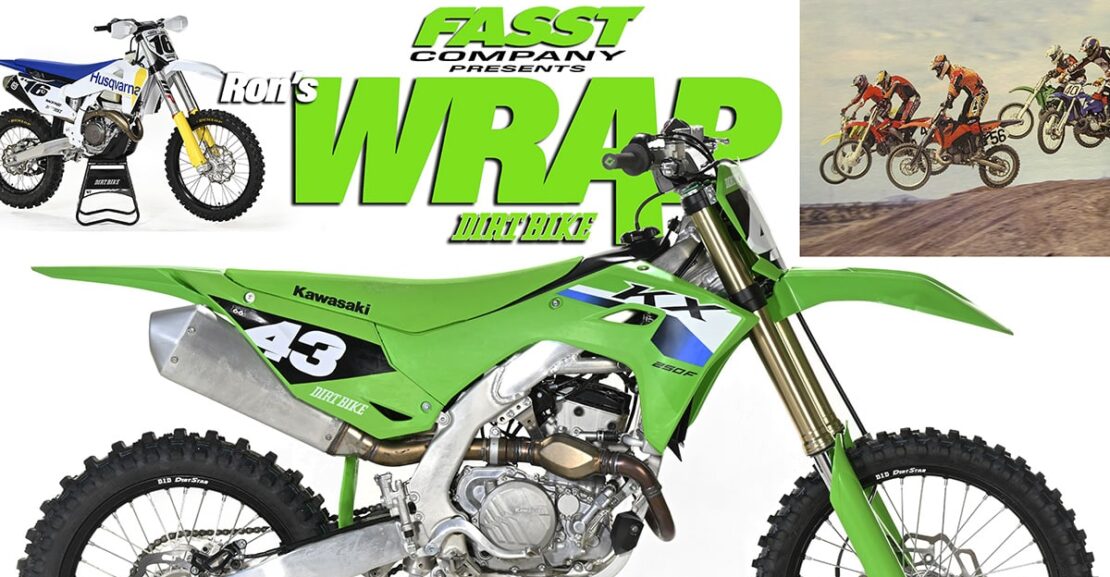
We have had the 2027 Kawasaki KX250F in our dirty little hands for over a week now. This year doesn’t have a long list of changes for the 250, but it’s more than Bold New Graphics. Kawasaki placed more emphasis this season on the KX450F, and the 250 got a number of spin-offs along the way.
Virtually all motocrossers have been asked (or told) to reduce sound output for the 2027 model year. This was prompted by AMA Pro motocross regulations that go into effect in January. The first bikes that we tested with the new noise standards were the 2026 GasGas motorcycles. They all lost power–not a huge amount, but it’s noticeable. Accordingly, we expected the new KX to be a little slower than it was. That didn’t happen. If anything, the KX has a little more peak power than ever. Kawasaki changed the exhaust pipe and combustion chamber. It also has different mapping. There were considerable changes to the suspension and the clutch, too.
The Kawasaki still has a hydraulic clutch with a belleville spring, but most of the workings have been refined.
On the track, the Kawasaki is still a screamer. It seems that all the 250Fs will go in that direction for 2027 except. For direct comparison, we had a 2026 Honda CRF250R, which has more of a throaty low-end motor. But where the Honda dies on top, the Kawasaki keeps right on going. Given the fact that the new Yamaha made only marginal gains on top and we expect everything else to lose peak power, that might well put the KX250 in front of the horsepower sweepstakes in the 2027 250 class. The Honda and, to a lesser extent, the KTM will have more bottom-end power if things shake out as we expect.
In overall handling, the Kawasaki hasn’t changed. The suspension is a little more active than before because there are considerable changes in the fork that result in freer movement. The average 250 rider, whom we expect to be under 150 pounds, will feel it’s stiff, but bigger riders will love it. The overall feel of the bike might also favor big riders. It’s not a cut-and-slice type of a bike; it has more of a long stable feel. Weight is unchanged; it hits the official Dirt Bike digital scale at 232 pounds without fuel. That makes it the heaviest of the 250s, if only by a few pounds.
The brakes and clutch seem to have a crisper feel this year. And then there’s the sound level. It’s noticeably quieter. That goes beyond the exhaust note. The KX always had a raspy sound with a lot of popping. That’s gone. The bike runs clean and crisp. We have a great deal of interest in this bike, so check out the December, 2026 print issue of Dirt Bike where we will have a full test.
THE SHOOTOUT ON 9-11
Where were you on 9-11-2001? That was 25 years ago today, so many of today’s top pro riders weren’t even born. At Dirt Bike, that particular day we were wrapping up our 2002 250 two-stroke shootout. The Honda CRF450R had just been released, but we decided to have one last 250 shootout without four-strokes. On 9-11, we gathered test riders and manufacturers at Sunrise Cycle Park in the high desert. We had also ridden at Elsinore and Glen Helen, but that Tuesday had a very different feel. Everyone had heard the news before arriving at the track, and we were glued to the radio, desperate for more info.
The shootout concluded anyway. It included the new Honda CR250R with its electric power valve, the Yamaha YZ250, the Suzuki RM250, the Kawasaki KX250 and the KTM 250SX. Weird that there were no others: no Husky, GasGas, Triumph, Ducati or Beta, and definitely no Chinese models. Here’s the full conclusion for the December, 2001 issue:
Yes, it’s another down-to-the-wire battle that would make last year’s presidential race look like a landslide. Test riders were divided and would even change their favorite bike from track to track. One by one, though, they weeded through the bikes on the way to a winner.
The Kawasaki is probably the biggest heart-breaker of the year. This machine was, at one time in the past, everyone’s favorite. It took a small step backwards in the engine department for 2002, but remains a familiar old friend. Here’s the problem: friendship doesn’t win races and the Kawasaki feels outdated by today’s standards. It’s a big bike that’s a little cramped in the rider’s compartment and despite having decent suspension, doesn’t inspire anyone with handling brilliance.
We don’t know where KTM found all the power for this year, but the motor is impressive. Just two years ago, the 250SX was a dog, and today it’s the horsepower king. Now the 250SX occupies the same position as the company’s 125; it’s a pro-level machine awaiting a kinder, gentler suspension and handling package so that the rest of us can get in on the fun.
There’s absolutely nothing wrong with the 2002 Suzuki RM250. It’s a bike devoid of any glaring faults. Suzuki has taken criticisms seriously over the years and improved the bike, part by part. Now the RM is smooth and forgiving, plus it has a bonus of being fun to ride. But the RM still doesn’t stand out in any one area, and while Suzuki has been playing catch up, Honda and Yamaha have been moving ahead.
That was the battleground for 2002: the CR250 versus the YZ250. Everyone loves the Yamaha’s motor and power delivery. Everyone loves the Honda’s frame and suspension. Think about what a reversal that is. Years ago, Honda was known as the motor company, but the suspension was frightening. On the other hand, Yamaha’s sleepy engines were mounted in super stable machines with top-notch forks and shocks. Times change.
This time the battle goes to Honda. After all the testing was done and the votes cast, the 2002 CR250R won a clear victory. It took some time, but Honda finally figured out how to make alu-minum do what it should as a frame material. And frankly, when a 250 MX bike weighs about the same as a 125 of just three years ago, it starts off with a huge advantage. Will Yamaha and the rest lose as much weight for 2003? Count on it.
NEXT UP: HUSQVARNA FX350
This weekend I get to test one of my favorite all-time motorcycles. We have a 2027 Husky FX350 cross-country bike in the house. Technically, there are no changes for 2027, but we didn’t really get to test the 2026 model. Very few were imported. Here’s an interesting side note: We expect the ’27 FX350 cross-country model to be more powerful than the 2027 FC350 motocross bike. That’s because there have been changes to the FC in order to meet new noise standards. Specifically, there are exhaust and air filter changes. The photo below shows that the air-filter cage on the motocross model (left) is closed off on one side. The air-filter elements do not interchange without the cage. Easy performance tip for owners of 2027 Husky motocross bikes: use the air filter and cage from the FX models.
That’s all for now!