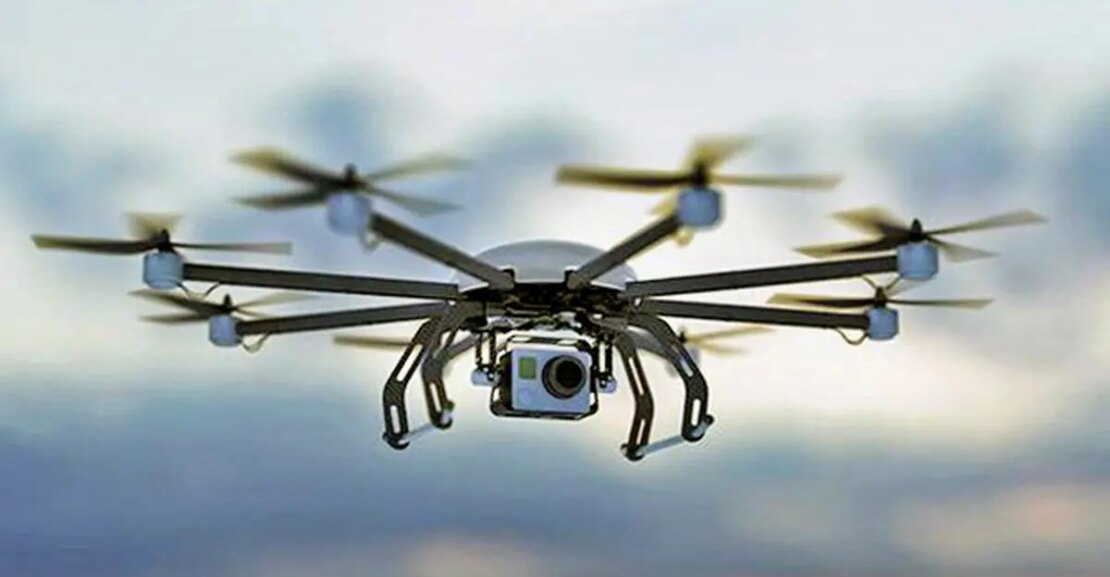
Senior officers at a FICCI event highlighted the need for indigenous drone development amid concerns over dependency on Chinese components.
| Photo Credit:
iStockphoto
India’s military drone industry is on the cusp of a significant expansion post-Operation Sindoor with the Indian Army lining up $250 million worth Request for Proposals (RFPs) in the next four months to augment its fire power and air defence systems and ISR capabilities, Major General Rajiv Chibber, in-charge of modernisation in the Infantry Division, said on Friday.
This will be in addition to $60 billion worth of contracts for the acquisition of Unmanned Aerial Vehicles (UAVs), counter-UAV systems, and loitering ammunition already executed by the Indian Army, the Major General said, speaking at a FICCI seminar-cum-exhibition on New Age Military Technologies.
Despite the optimistic outlook, the senior Indian Army officer cautioned about persistent challenges facing the drone industry. A primary concern is India’s reliance on imported critical active components, such as flight controllers and batteries. This dependence raises the risk of counterfeit parts infiltrating UAVs, a hint at the use of Chinese components, which has been highlighted in a series of investigative reports by businessline since last year.
To address the growing demand for diverse indigenous drones—from surveillance to logistics and kamikaze variants, which have become pivotal in modern warfare—a comprehensive ecosystem is being developed. A drone framework is expected by September or October, aiming to incentivise production, streamline testing, and mitigate current vulnerabilities. This framework will also promote civil-military fusion. Additionally, an accompanying policy on electronic warfare is in the pipeline, and the government is considering a drone corridor in Hyderabad.
“We have been in consultation with the Ministry of Defence and others to come up with a framework and by September or October we should be out with our drone framework wherein we are looking at how to incentivise all the production, how to get through the vulnerabilities and how to facilitate testing would be the basic theme of this framework,” Lt Gen Rahul R Singh, Deputy Chief of Army Staff (Capability Development & Sustenance), said in the opening remarks at the FICCI event.
Addressing industry concerns regarding policy constraints, including lengthy procurement cycles, Lt. Gen. Singh urged companies to prioritise quality and timely delivery alongside profitability. He implied that prompt equipment delivery in January could have significantly bolstered deployments during the four-day “Ops Sindoor.”
The Deputy Chief of Army Staff emphasised India’s challenging geopolitical landscape, characterised by “one border, three adversaries,” with Pakistan at the forefront, supported by China and Turkey. He highlighted that Pakistan’s military inventory comprises 81% Chinese systems and revealed that Beijing provides Islamabad with “live inputs” on Indian military vectors, even during high-level discussions between the two countries’ Director Generals of Military Operations (DGMOs). “When the DGMO (director general of military operations) level talks were going on, Pakistan… said that we know that your such and such important vector is primed and it is ready for action… he was getting live inputs from China,” he recounted.
More Like This
Published on July 4, 2025