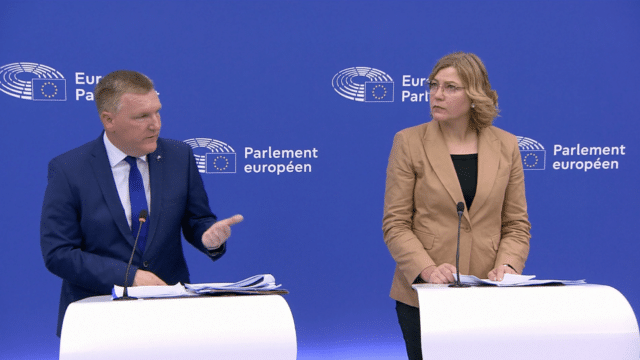
The European Commission’s annual report that examines rule-of-law developments in the EU found “a positive trajectory” in many member states, though challenges are evident in some and, in a few cases, the situation remains serious.
The EU Commission’s sixth annual “Rule of Law Report”, published on Tuesday, noted important reforms have been taken forward across the four key areas covered by the report – justice, anti-corruption, media freedom, and institutional checks and balances.
“While challenges remain in some member states, and in a few cases the situation is serious, the overall engagement with the process remains strong, and member states have addressed a substantial number of the 2024 recommendations, in full or in part,” the report noted.
The report assessed the progress made by member states on implementing the recommendations in the 2024 report, finding that 57 per cent of them have been followed up, either fully or partially. However, it said countries fully implemented or made “significant progress” on only 18 per cent of the EU Commission’s recommendations, compared with a success rate of almost 20 per cent last year.
The “Rule of Law Report” was first introduced in 2020 in response to deteriorating rule-of-law situations in many member states, most notably those in Central and Eastern Europe, such as Hungary, Poland and Slovakia. The report is designed to identify risks, develop solutions, and provide targeted support early on to strengthen the rule of law in the EU.
Among the individual member state reports…
Hungary continues to be the problem child of the EU. The only improvement the country has made was to increase the salaries of judges, prosecutors, and judicial and prosecutorial staff. The rest is failure: no progress has been made in tackling high-level corruption, media freedom is in an even worse condition, with critical journalists being accused by the newly established Sovereignty Protection Office for allegedly serving foreign interests. Political party financing remains non-transparent, and the government’s continued use of emergency powers undermines legal certainty. Foreign companies, including from other member states, face intensified regulatory pressure and the possibility for the government to interfere with the application of merger control rules continues to create legal uncertainty. Civil society continues to be under pressure. Government spokesman Zoltan Kovacs swiftly dismissed the report as part of the “ongoing effort by the European Commission to dismantle the key achievements of Prime Minister Orban’s governments and impose foreign political control over Hungary.”
Slovakia under the nationalist-populist Robert Fico is likewise making little headway in addressing the recommendations made in last year’s report. The EU Commission noted there had been no progress made in a number of areas, including: introducing measures to ensure that the members of the Judicial Council, notably those not elected by judges, are subject to sufficient guarantees of independence; ensuring the effective and independent investigation and prosecution of high-level corruption cases; advancing the process to establish legislative and other safeguards to improve the physical safety and working environment of journalists; and on ensuring effective public consultation and stakeholder involvement in the law-making process, including by avoiding excessive use of the fast-track procedure. “The civil society environment faces further pressure, and new reporting and information disclosure obligations introduce additional burden for civil society organisations,” it said.
For Czechia, the European Commission noted that progress has been made or is still ongoing in most areas highlighted in last year’s report. This includes progress made in the remuneration of judges and judicial staff, taking measures to reduce the length of judicial proceedings, and taking action to strengthen the transparency of lobbying practices, including with members of parliament (although not with their aides). The report criticised the lack of progress, however, in pushing through reforms to improve the transparency of media ownership, though welcomed moves – the subject of intense public debate over the past year – to secure sustainable funding for and safeguard the independence of public service media, including via a fee increase.
In Poland, the report acknowledged “significant efforts” made by the authorities to address long-standing concerns related to judicial independence, caused primarily by reforms in the sector taken under the previous Law and Justice (PiS) government. Those included the way judges are appointed, a disciplinary system for judges, as well as questions about the independence of both the Constitutional Tribunal and the Supreme Court. The report also noted those efforts have not so far led to a rectification of most issues. It also said “the perceived level of judicial independence in Poland continues to be very low among both the general public and companies”. The EU Commission called on Poland to further pursue reforms necessary to make corruption investigations more effective and lobbying more transparent, and ensure editorial independence at public media channels, among others.
The report took aim at Croatia regarding its judiciary, stating that “despite important steps taken, the length of judicial proceedings remains a serious issue.” Eurobarometer surveys conducted in 2025 show that the perception of judicial independence in Croatia is below 30 per cent, one of the worst results in the entire EU. Several member states have undertaken criminal law reforms to strengthen the fight against corruption, and Croatia is preparing draft legislation to support more efficient investigations and prosecutions of corruption offences and to strengthen the competences of its specialised prosecution service. The lack of comprehensive lobbying rules is mentioned as an area for improvement in the fight against corruption. While the implementation of Croatia’s new law on lobbying is on track, the public is not directly informed about meetings between lobbyists and officials. On the other hand, Croatia has made “significant steps” to improve the implementation of the People’s Ombudsperson’s recommendations and to enhance access to information. With regard to first-instance public procurement review bodies, the level of perceived independence is lowest in Croatia (alongside Bulgaria and Hungary). In Croatia, business stakeholders identified the efficiency and quality of the justice system, as well as the quality and frequent changes in legislation, as the main challenges for investment.
Romania continues to pursue reforms, particularly in strengthening the judiciary and prosecution services, and has made investments in digital infrastructure and justice system resources, the 2025 report noted. However, key challenges remain. Constitutional Court rulings have had major implications, including the annulment of presidential elections and the closure of many corruption cases due to statute of limitations decisions. Media independence is under threat, with concerns about political financing of private media and lack of reform in public service media governance. Businesses and civil society face uncertainty due to inconsistent legislation and regulatory burdens. Public trust in judicial independence is still low, and issues persist around the autonomy of the prosecution and the transparency of judicial appointments. While Romania’s reform path is noteworthy, sustained political commitment and better implementation are essential to build public confidence and ensure long-term rule of law resilience, it said.
Slovenia fully implemented recommendations made in last year’s report in several areas, the EU Commission noted. These included the recommendation to finalise the legislative process to amend the rules on parliamentary inquiries with adequate safeguards for independence of judges and state prosecutors; the recommendation to finalise the measures to increase the remuneration of judges and state prosecutors, taking into account European standards on resources and remuneration for the justice system; and the recommendation to complete the adoption of the new anti-corruption strategy and action plan and begin implementation. Significant progress was made on taking further measures to ensure that the reform of judicial appointments contains adequate safeguards for judicial independence.