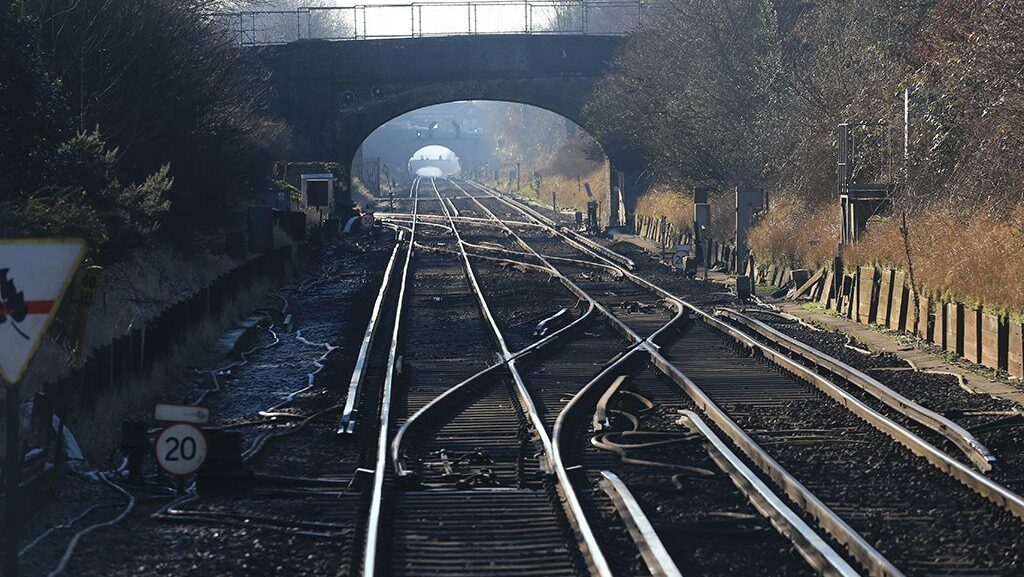
Rail minister Peter Hendy has defended the government’s decision to pause rail schemes, declaring there “isn’t the money to do everything”.
Hendy appeared in front of MPs on Wednesday (16 July) as part of an inquiry into rail investment pipelines.
It comes just a week after the government announced its plans to back around 50 rail and road projects. However, among the schemes paused is the long-running plans to finish electrifying the Midland Main Line, sparking widespread criticism.
“We simply didn’t have enough money available to do everything that we wanted,” Hendy told the cross-party Transport Committee.
On the Midland Main Line decision, Hendy said the reason the scheme “went down the list” was that new bi-mode trains will still “produce a better service, more capacity, and will be better trains”.
He added: “I know that’s not the perfect answer to people on the route who would like electrification north of the system, but… there isn’t the money to do everything that we wanted.”
The Department for Transport (DfT) has said it will “keep the potential for full electrification of the route under review”. The line between Kettering and Wigston was completed earlier this year.
During the final evidence session of the inquiry, Hendy also talked up the “certainty” the government’s new 10-year infrastructure strategy will give in planning for the construction workforce needed.
But he said the rail industry must “live with a bit of uncertainty”.
Hendy, the former chair of Network Rail, said: “Are we likely to get long- term, granular lists of railway infrastructure which are committed to by successive governments?
“Well, only if public policy doesn’t change, and public policy does have a habit of changing.”
But he said the government was aiming to “do things differently”.
Hendy said: “One of the reasons that this government has placed such an emphasis on long-term planning is because pipelines that are published but not funded, or ones that lack transparency, don’t help, frankly, very much.”
The minister also said that a change in travel habits post-Covid had affected decisions. “The really fundamental change in the railway market since Covid is that leisure is up, business travel is down, although commuting is still slowly returning.
“It wouldn’t be right to carry on with a huge and detailed list of things which were created pre-Covid,” he said.
During the session, Alex Hynes, the DfT’s director general for rail services, admitted that the latest figures from the National Skills Academy for Rail were “concerning”. It showed that the rail workforce dropped to 220,000 last year from 250,000 when the last review was held in 2021.
He suggested the figure could be helped by the multi-year spending review. “We have been clear that a steady investment pipeline is what is required to deliver a skilled workforce for rail,” he said.
On the plans for Great British Railways, Hynes said he expected it to be a “highly devolved organisation”.
He added: “We believe that local railway leaders who run track and train together will do a better job in their area than if it’s run from some big, centralised HQ.”