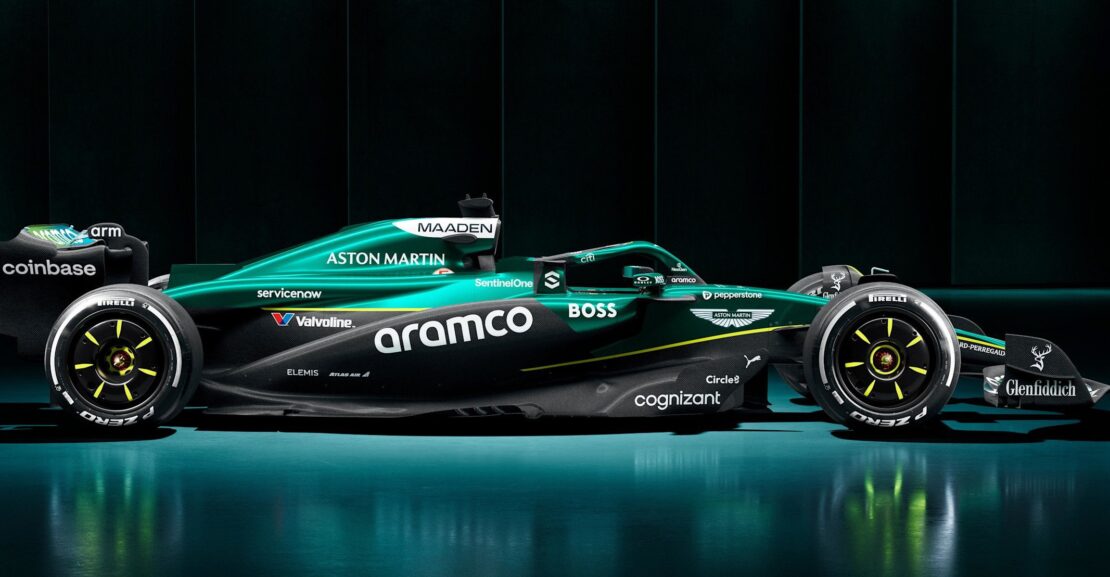
Honda is in Formula 1 for the long haul, company leadership told reporters during the Mexico City Grand Prix, and is excited for its new partnership with Aston Martin. F1 and MotoGP represent the pinnacle of motorsports and will be the company’s top competition priorities in years to come.
Two Automakers, One Team?
Competing automakers working together isn’t unusual in Formula 1, with several teams running engines supplied by a direct competitor. As of this season, only Honda, Mercedes-Benz, and Ferrari supply engines for all 20 cars on the grid. Still, Honda’s partnership with the Aston Martin Formula 1 Team for the 2026 season and beyond is different in its exclusivity.
It wasn’t odd when Honda provided engines to Red Bull the past several seasons because Red Bull didn’t build its own engines (it will going forward) and doesn’t sell cars. Aston Martin does both, but Honda executives including CEO Toshihiro Mibe, Honda Racing Corporation CEO Koji Watanabe, and U.S. CEO Kazuhiro Takizawa don’t see a conflict of interest.
Honda and Aston Martin are not competitors in the market, obviously, Takizawa pointed out. In fact, he and the other executives see opportunities for collaboration beyond race cars with each brand potentially able to help the other with everything from engineering to marketing. Aston Martin is, after all, a very valuable brand, he said.
Mibe added that Honda is already in discussions with Aston Martin executive chairman Lawrence Stroll about expanding their relationship. Before the talks can advance, though, Honda needs to first prove itself on the F1 circuit, he said.
Mibe sees Aston Martin Racing as a team on the rise. He pointed to the hiring of ex-Red Bull aerodynamic wizard Adrian Newey as another key to the team’s potential. Mibe wants to see its drivers on the podium as soon as possible and said Honda will do its part to make it happen. In fact, he’ll be attending the season-opener in Australia next March to the inspect the cars and see the initial results himself.
While none of the assembled executives would comment, none rejected the suggestion that a substantial number of Aston Martin customers could potentially be future HondaJet customers.
Tech Transfer Isn’t Straightforward
Honda had considered leaving F1 a few years ago, but changed course after seeing the 2026 regulations which require far more electric power in the hybrid drivetrain. Now, the electric motor will have to provide nearly 50 percent of the combined power, up from just over 20 percent today. This provides an unprecedented opportunity to develop battery, inverter, electric motor, cooling, and controller technology.
It’s not as simple as putting those components into consumer vehicles, though, HRC senior managing director Ikuo Takeishi said. The specific types of motors and batteries used in racing applications aren’t appropriate for your stop-and-go commute, but the fundamental principles are transferable. Magnets and windings that produce a more energy efficient electrical field and batteries that are lighter but hold more electricity are both applicable to Honda cars and SUVs. Honda also moves its engineers between divisions in order to spread knowledge and expertise, so people who worked on the F1 powertrain will also have their hands on future hybrid and EV powertrains for regular cars.
Win Races, Sell Performance Parts
Part of Honda’s short-lived decision to exit F1 was the astronomical cost and the need for that money elsewhere in the company, specifically to develop EVs. The 2026 season also introduces a cost cap, which makes Honda’s participation easier to justify to the accountants. It’s good business, Watanabe said, but also the biggest challenge in delivering performance.
To help offset some costs, HRC will ramp up the number of Honda-approved aftermarket performance parts it offers, he said. Ideally, success on the racetrack will encourage more owners to modify their Honda cars, SUVs, and motorcycles with parts that don’t void the warranty.
Focusing on the Pinnacles
Asked about other racing series, Watanabe said Honda and HRC are drilling down on Formula 1 and MotoGP as their top priorities. Once they’ve achieved success there, they’ll consider other series such as Le Mans. That doesn’t mean Honda will pull out of all the other series it currently competes in, but participation in regional series such as IndyCar and IMSA will be up to regional offices. Honda has not yet committed to remaining in IndyCar (a decision is expected soon) but its Acura division will continue in IMSA’s GTP class for the 2026 season.